
The History of Château de Méridon

Origins
In the XIIIth century, the fief of Méridon belonged to the lordship of Chevreuse: a manor and a house surrounded by gardens and farmland. In 1464 Jean Langlois, a squire, took over the fief, by then declared in ruins after the Hundred Years' War. He gave it as a dowry to his daughter-in-law on her marriage to Hélie Cauchon; their son Dauphin Cauchon inherited it. When he died without heirs, his sister succeeded him; she married Mathurin Chauderon, lord of Vaugien, and their grandson Pierre de Chauderon became lord of Méridon in 1579.
In 1601 the manor was first called a château: two large buildings enclosed by high crenellated walls, a dovecote, a wine press, a small tower used as a prison and a hall for administering justice, all surrounded by moats with drawbridges.

The Whites and John Singer Sargent
In 1908 the Marquis de Breteuil bought Méridon and from 1909 let it to the United States Ambassador in Paris, Henry White, a close friend of President Theodore Roosevelt, and his wife Margaret Stuyvesant Rutherfurd White. They received diplomats and artists here, in complete discretion. Margaret White was a muse of John Singer Sargent.
Her portrait by Sargent now hangs in the National Gallery of Art in Washington and is regularly lent to exhibitions around the world.
In December 2025, our Custodian Jehanne Bosco rediscovered Margaret White's portrait during an exhibition at the Musée d'Orsay. The story of that rediscovery is told in our Journal →
Lady Sullivan
Between the wars, Mrs Sullivan, an American-born aristocrat, made Château de Méridon one of the best-kept estates in the region.
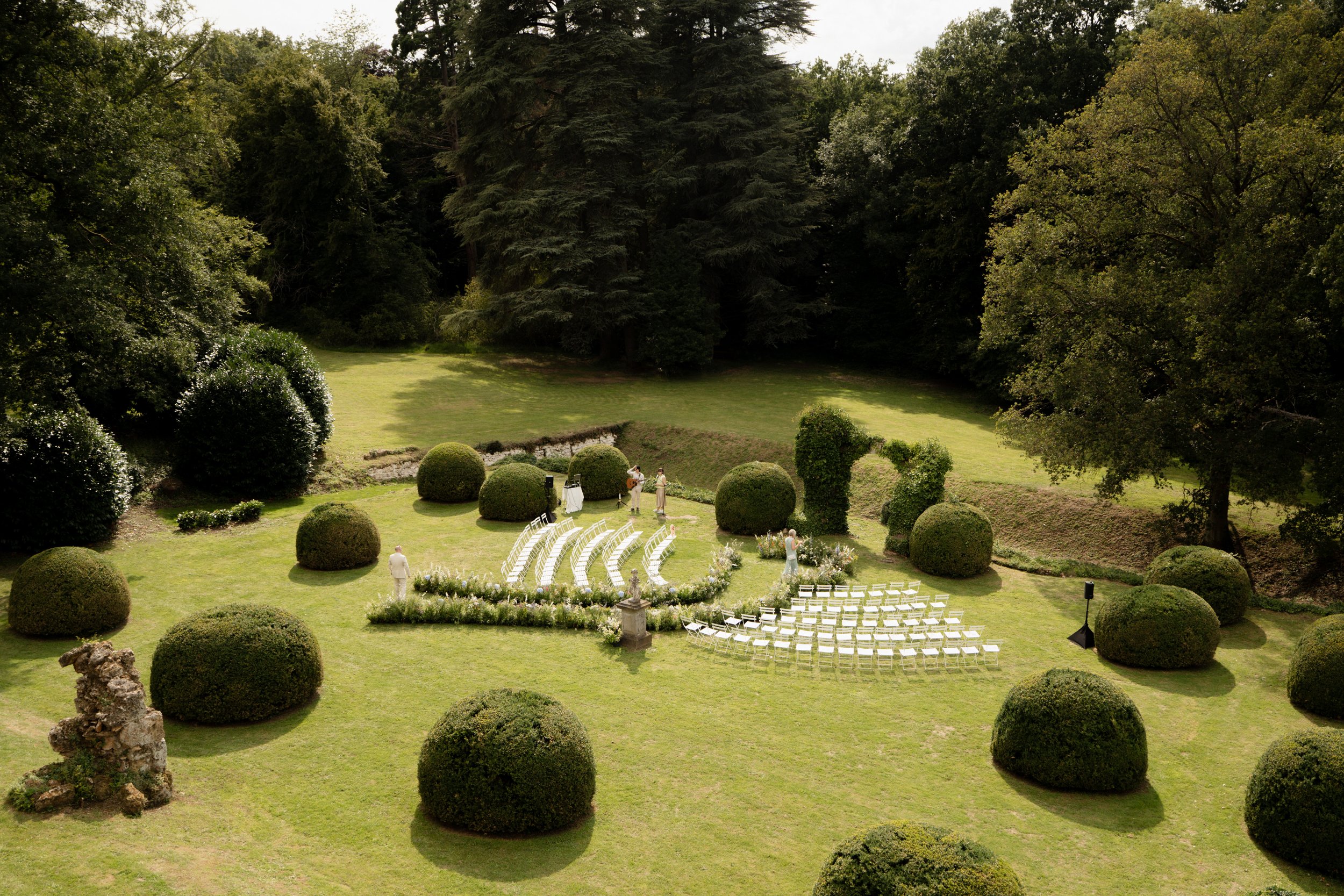
She created the Medici gardens and the boxwood garden, and hosted evenings for a close circle of friends.
Our boxwoods are now more than a century old, and our gardeners work their hardest to keep alive and well.
After the Second World War, the Dutch state leased the château as a reception centre.
In 1946 a Dutch association opened a training centre here for farmers settling in France; the Franco-Dutch Cultural Centre bought it in 1958.
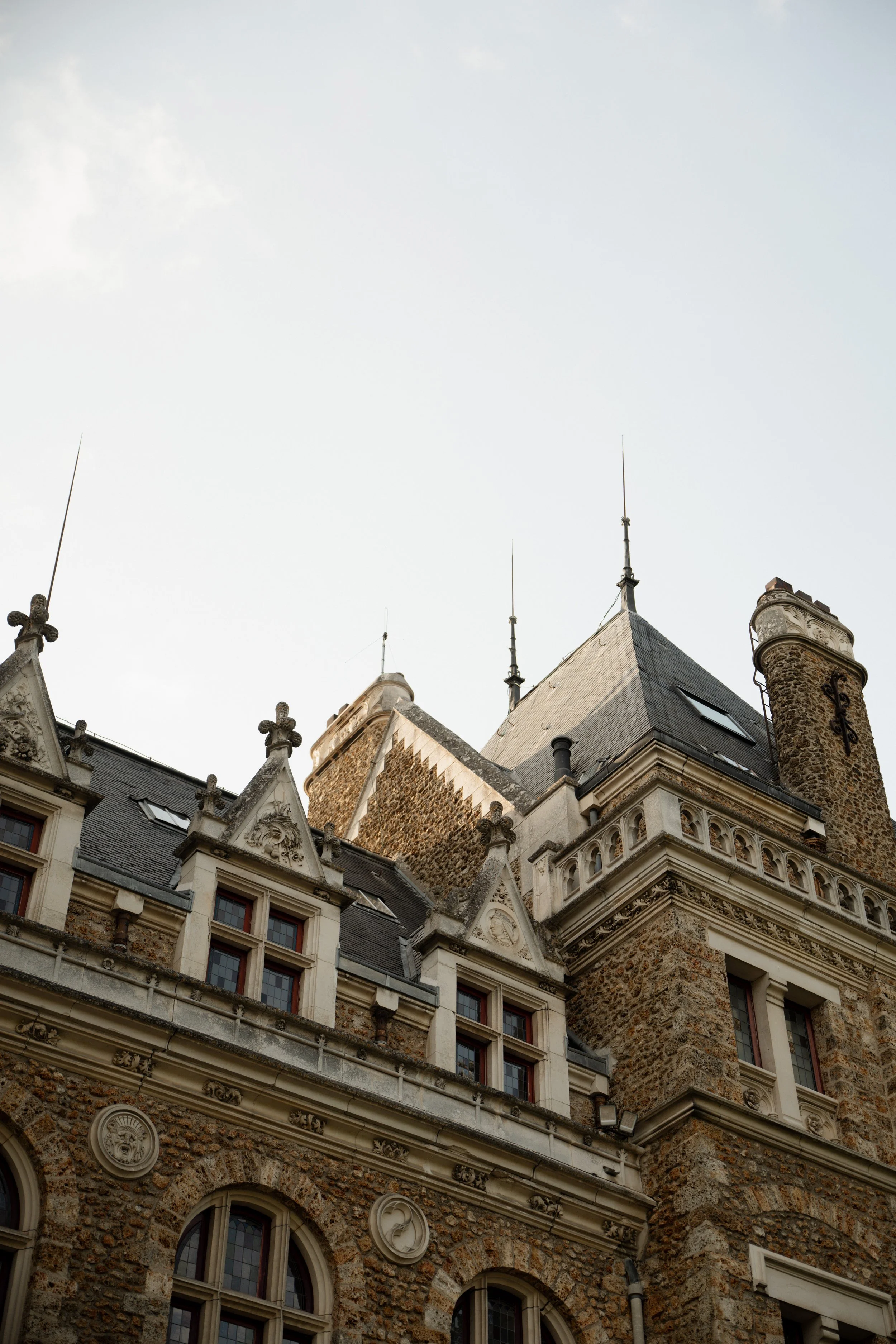
For centuries, Château de Méridon has welcomed a few people at a time. Perhaps you are next.
Jean de Péricard was granted permission to build a chapel, as Chevreuse was far and the roads poor in winter.
He also received the rights of high, middle and low justice.
In 1650 Guillaume Dugué de Bagnols, lord of Les Troux, reunited the estate, which remained in his family until the end of the 18th century.
Tradition holds that Louis XV hunted here.
A family seat

The present Château
In 1880, Count Marqués di Braga, State Counsellor and director of Crédit Foncier, inherited the ruined estate.
For his daughter-in-law he built the present Château de Méridon on the site of the old château, designed by architect Eugène Bruneau.
Turrets, mullioned windows, small balconies and stained glass make up a neo-Renaissance château, originally set in an English-style park and a French formal garden covering 15 acres.

Today
From 2000 under Dutch ownership and then a private owner who bought the property in 2013, the Château de Méridon became an event venue: weddings, birthdays, seminars, film shoots, one reception after another.
For those years it became a place people passed through rather than a home that was lived in, and little by little it lost something of its soul.
We felt it the first time we walked through its doors, before we bought it: an empty shell, longing to come back to life.
We chose to restore it not only for comfort, but true to what it was and had always been: a confidential home, royally lived in and loved, where one receives those closest to them, in all privacy.
In 2022, the Château de Méridon changed private hands again, this time with one clear ambition: to bring the estate back to life and return it to its most glorious era. Major restoration works were carried out in 2022 and 2023 to offer Méridon's guests complete comfort within a country château. All the electrics were renewed, and a new plumbing network was built for 18 marble bathrooms, one for every bedroom, turning them into true suites.
The furniture was sourced from antique dealers or made to measure, with the Art Deco movement as its common thread.
In 2026 and 2027, new work in the gardens will restore the estate's former grandeur.
The first stage will recreate the original gravel walks of the Medici garden.
This garden and the boxwood garden - both created by Lady Sullivan in the early 1920s, bear witness to Château de Méridon's place in French heritage.
The second and third stages will redraw the arboretums planted by those who came before us, with the mission to plant 9,344 trees around the estate.
The Château de Méridon now hosts one party at a time: private stays, intimate celebrations and retreats.
Much of Château de Méridon's history was lost when its archives were scattered over the last century. Today, we are patiently recovering it from letters, land registers, family papers and the memories of those who knew the house.
Each discovery is shared first at The Sargent Table, then in our Journal.